
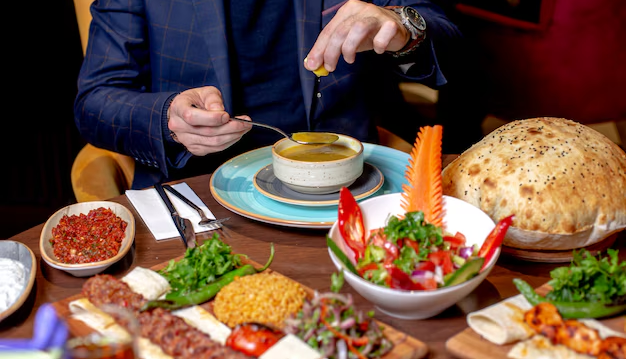
The French Classical Menu is a structured sequence of courses used in formal dining, with origins dating back over 100 years. It traditionally consists of 17 courses, designed to be served in a specific order. The meal progresses from light to heavier dishes, with breaks to cleanse the palate, and is typically a long affair, lasting 4-6 hours.
Here’s a brief overview of the 17 courses:
- Appetizers – Light starters like pâté or smoked fish.
- Soup – Hot or cold soups.
- Egg Course – Occasionally included in modern menus, but not common today.
- Dishes with Flour – Such as pasta or rice.
- Fish Course – Light, sauced fish dishes.
- Entrée – Small, well-garnished dishes with sauce.
- Sorbet – A palate cleanser (often frozen fruit juice).
- Relevé – Meat dishes, traditionally game birds.
- Roast – Roasted meats.
- Vegetables – Served alongside meats.
- Salad – Usually after the vegetables.
- Cold Buffet – A selection of cold dishes.
- Cheese – A cheese platter or cheese-based dishes.
- Sweets – Dessert items.
- Savory Dishes – A contrasting savory course after the sweets.
- Fruit – Served as a distinct course.
- Beverage – Typically tea, to conclude the meal.
Though not all 17 courses are used in modern meals, the French Classical Menu still serves as the foundation for many contemporary dining structures, whether for multi-course meals or simplified menus.
- Teacher: Admin User
Skill Level: Beginner
