
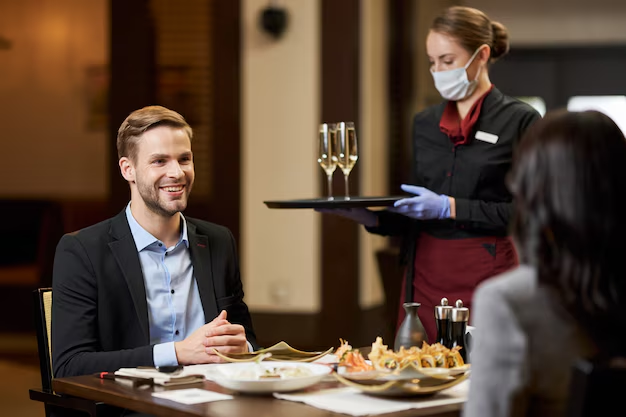
This course provides a concise guide to effectively and professionally clearing tables in a service setting, focusing on customer comfort and operational efficiency. Below are the key steps and tips outlined in the course:
Key Points:
1. Customer Readiness Check
- Ensure all customers are finished before clearing.
- Customers typically place their knife and fork together on their plate to indicate they are done.
- When in doubt, politely confirm with the customer.
2. Approach and Handling
- Always clear from the right-hand side of the customer when possible.
- Minimize disruption and avoid the risk of spills by carefully removing items.
3. Plate Handling Technique
- Use your right hand to pick up plates and transfer them to your left hand behind the customer.
- Secure plates by holding with two or three middle fingers underneath, with the small finger and thumb providing support on top.
- Maintain a stable platform by balancing plates on your remaining fingers and arm.
4. Food Scraping and Cutlery Placement
- Scrape leftover food from additional plates onto the first one behind the customer.
- Place cutlery securely on the plate, using the knife's bridge to stabilize the fork and prevent slipping.
5. Side Plates and Accessories
- After clearing main plates, ask if the customers have finished with side plates and clear them similarly.
- Use a service tray for smaller items like side plates, cruets, or utensils.
6. Final Cleaning Steps
- Use a crummer to remove crumbs and debris from the table.
- Sweep crumbs away from the customer without leaning across them.
Key Takeaways:
- Prioritize customer comfort and avoid intrusive movements.
- Practice safe and stable plate handling to maintain professionalism.
- Ensure all table items are cleared efficiently and tidily, leaving the area neat for the next use.
This training is ideal for improving the skills of waitstaff and maintaining high standards of service in hospitality.
- Teacher: Admin User
Skill Level: Beginner
